BIOGRAPHY
The Story
Robert Nesta Marley was born on February 6, 1945, in Nine Mile, St. Ann. His early childhood was rural, but Kingston became the decisive setting for his musical development. In Trench Town he entered a community that was economically marginalized yet extraordinarily important to the formation of ska, rocksteady and reggae. Marley’s later international image can obscure how deeply his craft was rooted in this local Kingston environment.
Joe Higgs was one of the crucial figures in that formation. Higgs coached young singers in harmony, timing and stagecraft in Trench Town and helped bring Marley, Neville “Bunny” Livingston and Peter Tosh together. Junior Braithwaite, Beverly Kelso and Cherry Smith were also part of the early Wailing Wailers configuration, before the Marley–Tosh–Livingston trio became its best-known core.
Under Clement “Coxsone” Dodd at Studio One, the Wailers became part of Jamaica’s ska explosion. “Simmer Down” was the early breakthrough, followed by recordings that documented rude-boy culture, romance, spirituality and the group’s developing vocal identity. Studio One gave Marley professional recording experience, but the Wailers eventually sought greater independence.
Marley married Rita Anderson in 1966 and spent part of that year in Delaware, where his mother Cedella had relocated. After returning to Jamaica, Rastafari became increasingly central to his life and music. The Wailers established Wail’N Soul’M, an independent label whose name joined the Wailers with Rita’s group, the Soulettes.
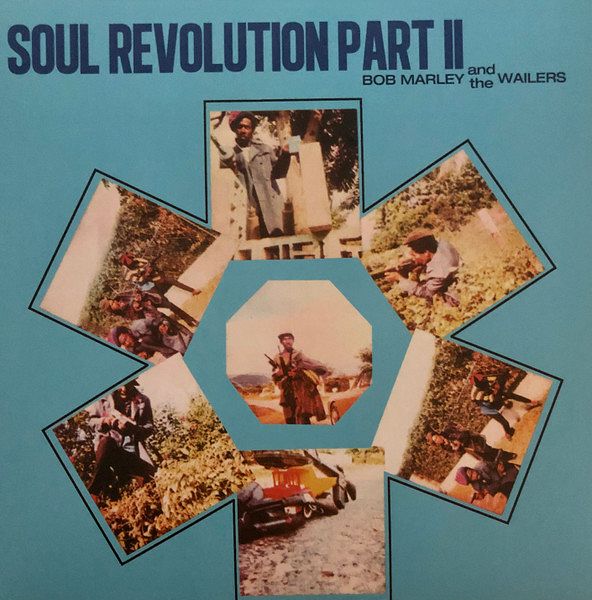
At the turn of the 1970s, the Wailers’ work with Lee “Scratch” Perry transformed their sound. Perry connected the singers with bassist Aston “Family Man” Barrett and drummer Carlton Barrett, the rhythmic nucleus of the Upsetters. Recordings such as “Soul Rebel,” “Duppy Conqueror” and Peter Tosh’s “400 Years” combined the trio’s voices with a heavier reggae approach. Soul Rebels and Soul Revolution preserve this period.
Chris Blackwell and Island Records provided the route to a larger international audience. Catch a Fire and Burnin’, both released in 1973, still document the original Marley–Tosh–Wailer partnership rather than a Bob Marley solo act. Catch a Fire’s Jamaican recordings were subsequently prepared with additional overdubs and mixing in London, while Tosh remained a major writer and lead voice.
By 1974 Peter Tosh and Bunny Wailer had left the touring group. Natty Dread became the first album credited to Bob Marley & The Wailers and introduced Rita Marley, Marcia Griffiths and Judy Mowatt as the I-Threes. Family Man and Carlton Barrett remained central to the rhythm section, with Al Anderson, Tyrone Downie, Alvin “Seeco” Patterson and others helping define the later band.
Rastaman Vibration expanded Marley’s international audience in 1976, but Jamaica’s political violence intruded directly into his life. On December 3 gunmen attacked 56 Hope Road while Marley and his circle prepared for the Smile Jamaica concert. Marley and Rita were wounded and manager Don Taylor was seriously hurt. Marley nevertheless appeared at Smile Jamaica two days later.
After a period in the Bahamas, Marley settled in London. Exodus, released in 1977, and much of Kaya emerged from this period. Exodus joined militant and spiritual songs with “Jamming,” “Waiting in Vain,” “Three Little Birds,” “One Love/People Get Ready” and the title track. The London period also produced the celebrated Rainbow Theatre performances.
Marley returned to Jamaica for the One Love Peace Concert at the National Stadium on April 22, 1978. During “Jamming” he called Prime Minister Michael Manley and opposition leader Edward Seaga onto the stage and joined their hands above his head, creating one of Jamaican music’s most reproduced images.
Survival in 1979 placed African liberation and Pan-African themes at the center of the album. “Zimbabwe” became directly connected to history when Bob Marley & The Wailers performed during Zimbabwe’s independence celebrations in April 1980, including performances at Rufaro Stadium.
Uprising was the final studio album released during Marley’s lifetime. The Uprising Tour carried the band through Europe and the United States, but Marley’s health deteriorated. His final concert took place at the Stanley Theatre in Pittsburgh on September 23, 1980. He died in Miami on May 11, 1981, aged 36.
Marley’s legacy is not only a story of record sales or celebrity. His catalogue linked Jamaican popular music with Rastafari, anti-colonial thought, African liberation, poverty, political violence, love and spiritual endurance. The Vault therefore treats Marley as part of a connected Jamaican music network rather than isolating him from the musicians, producers, studios and rhythms that produced the work.